Private Label Enzymes Supplier for Custom Formulation
Troubleshoot private label enzyme formulation with pH, temperature, dosage, QC, COA/TDS/SDS, pilot validation, and cost-in-use guidance.
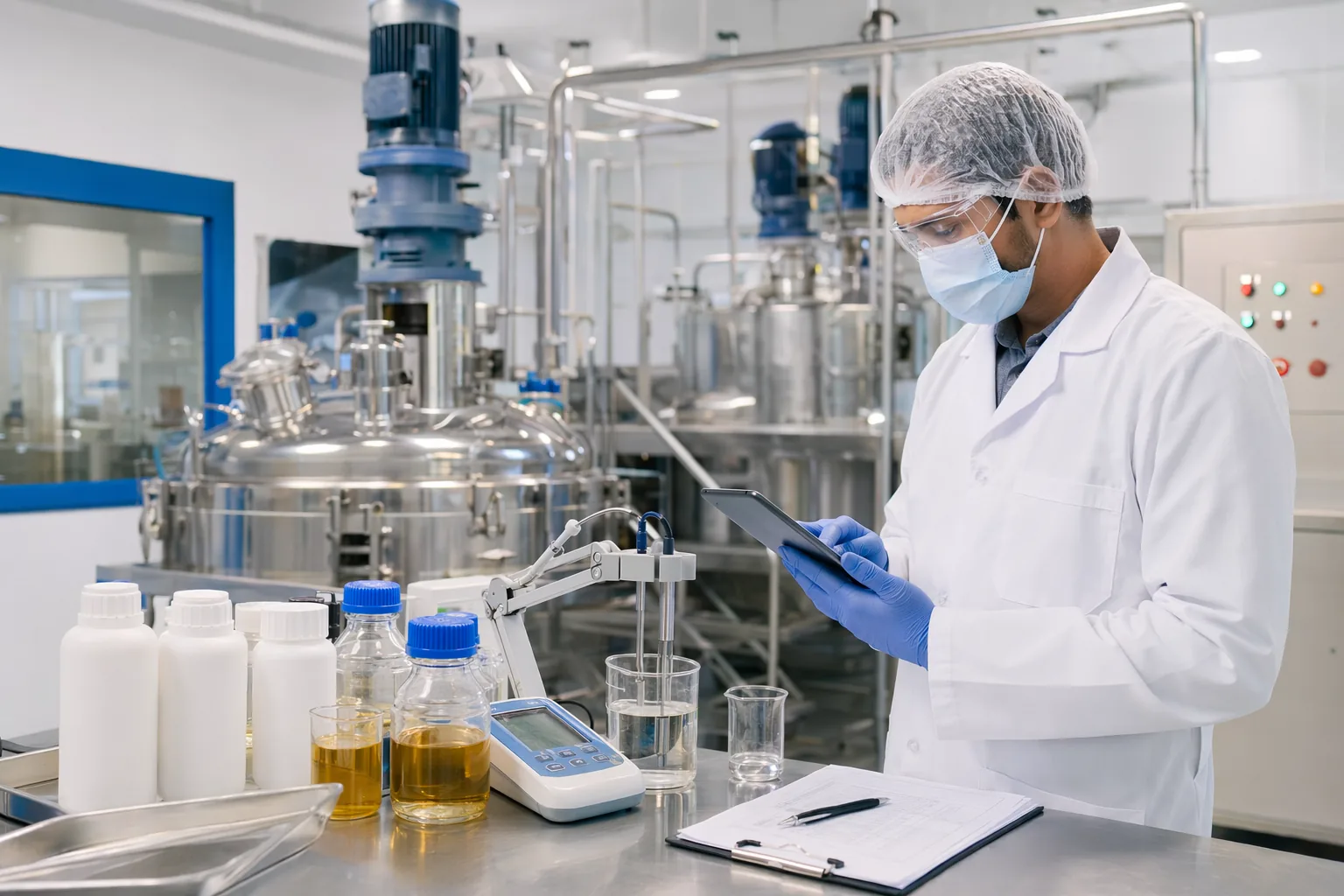
Build reliable private label enzyme products by aligning activity, process conditions, documentation, and scale-up controls before commercial production.
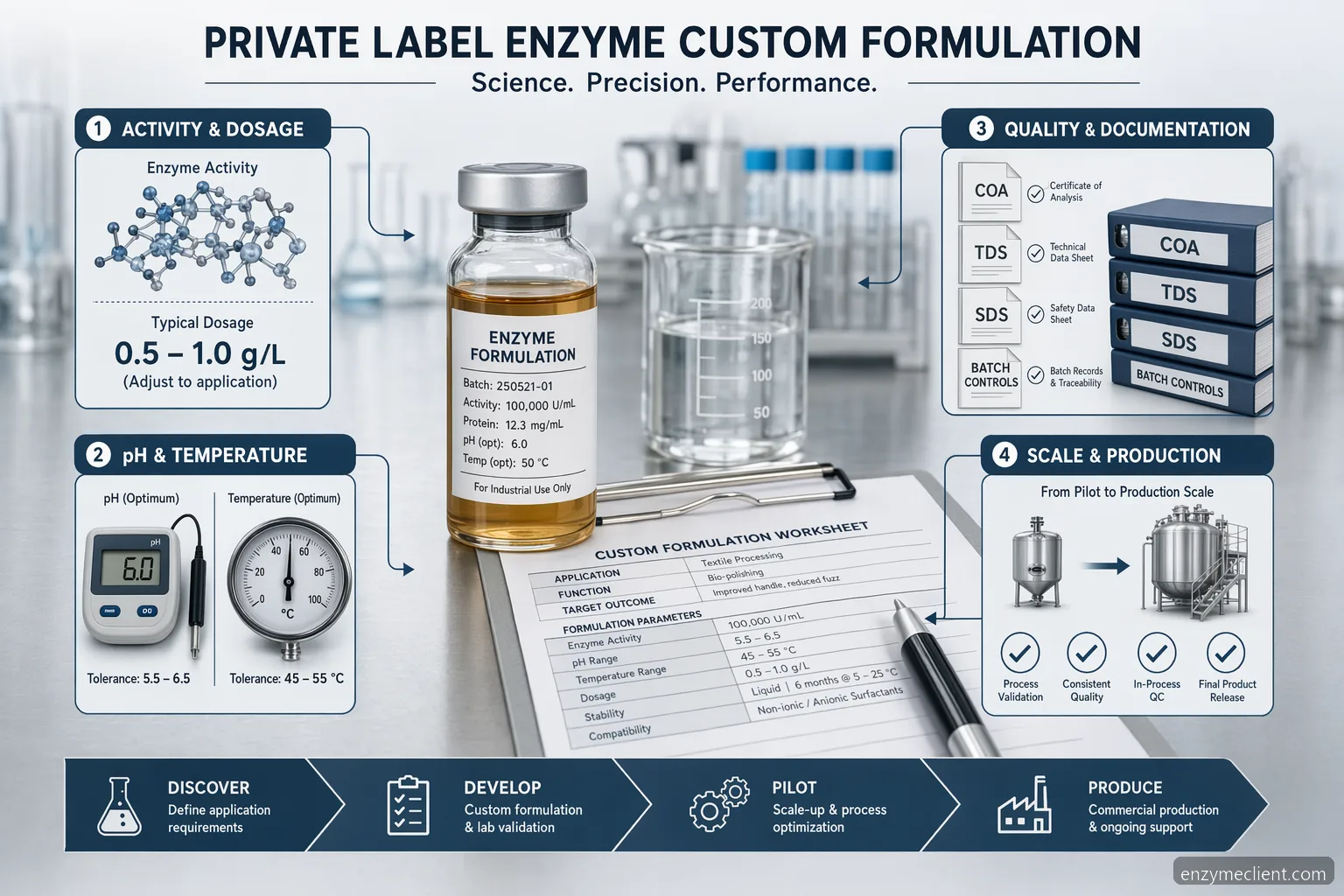
Why Custom Formulation Often Fails in Private Label Enzymes
A private label enzymes supplier for custom formulation should begin with the process problem, not a generic catalog recommendation. Many formulation failures occur because the enzyme is active in the lab but not under plant conditions. Common issues include pH drift, short residence time, elevated shear, incompatible preservatives, high ionic strength, or heat exposure during blending and storage. For industrial private label enzymes custom formulation projects, the supplier should translate the target performance into enzyme activity units, dosage bands, carrier selection, and packaging requirements. A protease, amylase, cellulase, lipase, or blended enzyme system may need different stabilizers and process windows. Buyers should share substrate type, solids level, water activity, expected shelf life, and downstream processing steps. This allows the supplier to create a formulation that is practical for production and defensible in cost-in-use calculations.
Define the substrate, process objective, and failure mode before selecting enzymes. • Confirm the activity unit method used on the COA. • Separate lab activity from real process performance.
Dosage, pH, and Temperature Troubleshooting
Private label enzymes for custom formulation should be tested across realistic operating ranges. Initial dosage screening often starts at 0.01% to 0.50% by weight for liquids or 50 to 2,000 ppm active preparation, depending on substrate load, contact time, and enzyme strength. Many industrial enzymes perform best between pH 4.0 and 9.0, but the correct range depends on enzyme class; acidic cellulases may work around pH 4.5 to 6.0, while many alkaline proteases perform around pH 8.0 to 10.5. Temperature screening commonly covers 25°C to 60°C, with some specialty systems tolerating higher short-term exposure. If performance drops, check whether the enzyme is being added before a heat step, diluted into extreme pH, exposed to oxidizers, or held too long in a concentrated premix. The goal is a robust use window, not a single ideal lab point.
Run a low, mid, and high dosage curve. • Measure actual process pH after all ingredients are added. • Add enzyme after high-heat steps when possible. • Validate performance at minimum and maximum plant temperatures.
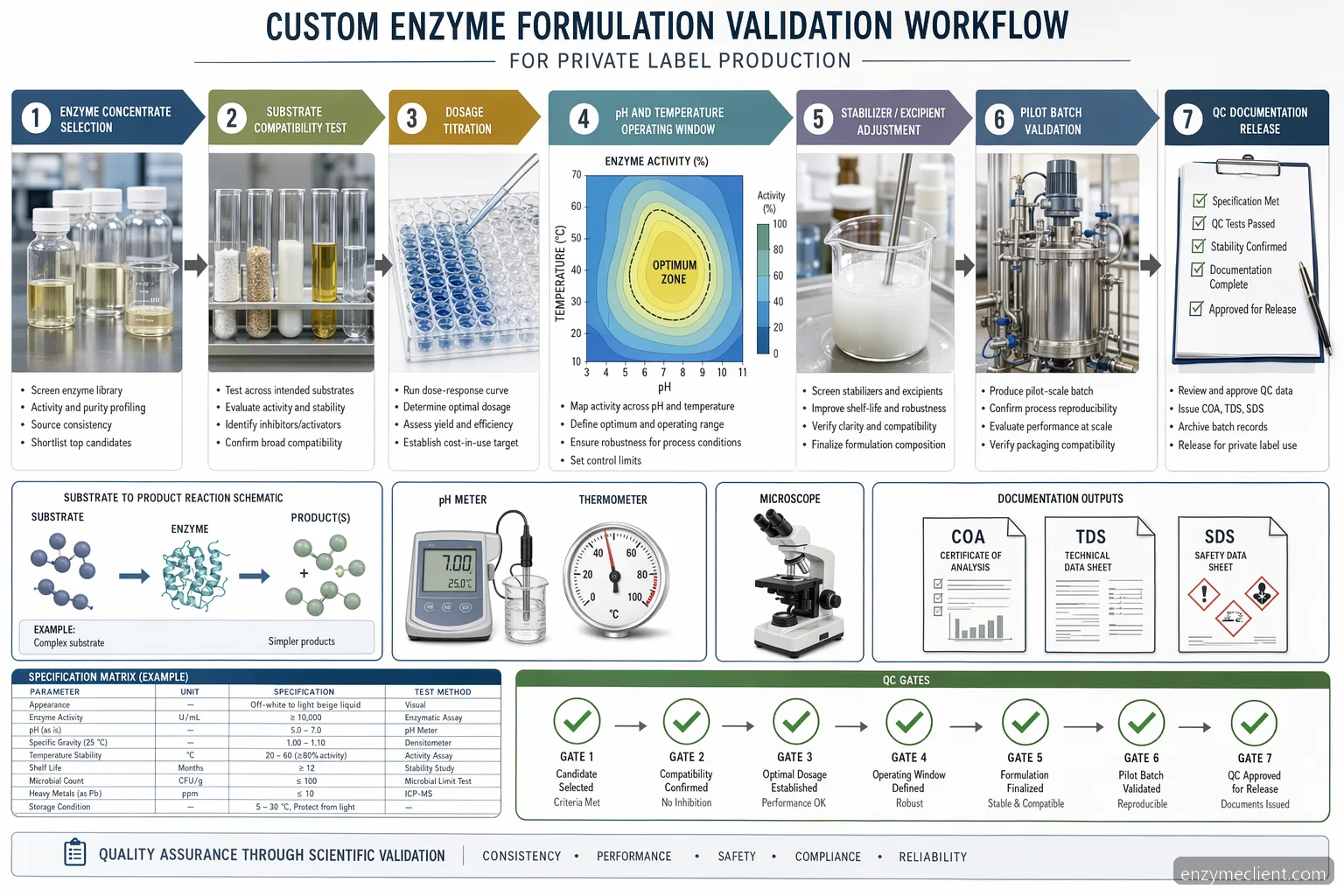
Documentation: COA, TDS, SDS, and Batch Controls
A custom enzyme formulation supplier for private label programs should provide documentation that supports purchasing, quality, production, and regulatory review. The Certificate of Analysis should identify batch number, activity result, test method reference, appearance, and any agreed microbiological or moisture checks. The Technical Data Sheet should describe recommended use conditions, typical pH and temperature range, storage guidance, and handling notes. The Safety Data Sheet should support workplace hazard communication and safe material handling. For enzyme contract manufacturing, buyers should also request batch traceability, retention sample policy, allergen or sensitization handling statements where relevant, and change notification terms. These documents do not replace application validation, but they reduce ambiguity and help compare private label enzymes supplier for private label proposals on a like-for-like basis.
Review COA activity units and acceptance limits. • Check TDS use conditions against the actual process. • Confirm SDS availability before receiving production material. • Agree on change-control communication before launch.
Pilot Validation Before Enzyme OEM Scale-Up
Pilot work bridges the gap between bench screening and commercial enzyme OEM production. A structured pilot should test the final formula, water quality, order of addition, mixing energy, hold time, packaging, and expected storage conditions. For liquid systems, monitor viscosity, pH drift, phase separation, odor, and activity retention over accelerated and real-time intervals. For dry blends, evaluate dusting, segregation, flowability, moisture pickup, and activity after blending. Performance testing should use the customer’s actual substrate or a validated surrogate, with clear pass/fail criteria. Pilot validation also supports cost-in-use modeling by identifying the lowest effective dosage that meets performance targets. For industrial custom enzyme formulation private label projects, this step reduces the risk of over-formulation, under-dosing, rejected batches, and expensive reformulation after launch.
Use plant-relevant water, substrate, and mixing conditions. • Set measurable release and performance criteria. • Compare cost per treated unit, not only price per kilogram. • Keep pilot samples for reference during scale-up.
How to Qualify a Private Label Enzyme Supplier
Supplier qualification should evaluate technical fit, manufacturing discipline, and responsiveness. A capable partner for private label enzymes for private label programs will ask for process data, not only annual volume. Review whether the supplier can support custom enzyme formulation, liquid or powder formats, packaging sizes, labeling needs, lead times, and repeatable batch documentation. Ask how raw material changes are evaluated, how out-of-spec results are handled, and whether pilot batches can be produced before full commercial commitment. For industrial private label enzymes private label supply, commercial terms should include minimum order quantities, shelf-life basis, storage conditions, complaint handling, and confidentiality expectations. The best supplier is not always the lowest unit price; it is the one that can document consistency, help troubleshoot field issues, and improve cost-in-use across production cycles.
Request representative samples and documentation together. • Audit technical support depth, not just sales response time. • Clarify MOQ, lead time, packaging, and label responsibilities. • Evaluate total cost-in-use before awarding supply.
Technical Buying Checklist
Buyer Questions
Provide the substrate, target performance, current failure mode, pH, temperature, contact time, water quality, solids level, processing steps, and any restricted ingredients. Share expected dosage limits, packaging format, annual volume, and documentation requirements. This helps the supplier recommend a realistic formulation and avoids testing enzymes under conditions that do not match production.
Run a dosage curve at the actual process pH and temperature. If higher dosage improves performance, the starting level may be too low. If all dosage levels fail, check pH, heat exposure, inhibitors, mixing, and contact time. A supplier should help separate enzyme concentration problems from compatibility or process-window problems.
At minimum, request a COA for each batch, a TDS for use and storage guidance, and an SDS for safe handling. For contract manufacturing, also ask about batch traceability, retention samples, change notification, shelf-life basis, and agreed QC release tests. Documentation should match the product you are buying, not a generic enzyme family.
Pilot validation confirms that the enzyme works in the final formula, packaging, and process conditions before commercial production. It can reveal pH drift, poor dispersion, loss of activity, phase separation, dusting, or inadequate performance at plant temperature. It also identifies the lowest effective dosage, which is critical for accurate cost-in-use calculations.
Compare cost per treated unit, not only price per kilogram. Review enzyme activity, recommended dosage, format, shelf life, MOQ, lead time, documentation, QC testing, and troubleshooting support. A lower-priced product may cost more if it requires higher dosage, has weaker stability, or lacks the documentation needed for supplier qualification.
Related Search Themes
private label enzymes for custom formulation, industrial private label enzymes custom formulation, custom enzyme formulation supplier for private label, private label enzymes supplier for private label, industrial custom enzyme formulation private label, custom enzyme formulation for private label
Lipase (Thermostable) for Research & Industry
Need Lipase (Thermostable) for your lab or production process?
ISO 9001 certified · Food-grade & research-grade · Ships to 80+ countries
Frequently Asked Questions
What should I provide before requesting a custom enzyme formulation?
Provide the substrate, target performance, current failure mode, pH, temperature, contact time, water quality, solids level, processing steps, and any restricted ingredients. Share expected dosage limits, packaging format, annual volume, and documentation requirements. This helps the supplier recommend a realistic formulation and avoids testing enzymes under conditions that do not match production.
How do I know if an enzyme dosage is too low or the conditions are wrong?
Run a dosage curve at the actual process pH and temperature. If higher dosage improves performance, the starting level may be too low. If all dosage levels fail, check pH, heat exposure, inhibitors, mixing, and contact time. A supplier should help separate enzyme concentration problems from compatibility or process-window problems.
What documents should a private label enzyme supplier provide?
At minimum, request a COA for each batch, a TDS for use and storage guidance, and an SDS for safe handling. For contract manufacturing, also ask about batch traceability, retention samples, change notification, shelf-life basis, and agreed QC release tests. Documentation should match the product you are buying, not a generic enzyme family.
Why is pilot validation important before private label launch?
Pilot validation confirms that the enzyme works in the final formula, packaging, and process conditions before commercial production. It can reveal pH drift, poor dispersion, loss of activity, phase separation, dusting, or inadequate performance at plant temperature. It also identifies the lowest effective dosage, which is critical for accurate cost-in-use calculations.
How should I compare enzyme OEM supplier quotes?
Compare cost per treated unit, not only price per kilogram. Review enzyme activity, recommended dosage, format, shelf life, MOQ, lead time, documentation, QC testing, and troubleshooting support. A lower-priced product may cost more if it requires higher dosage, has weaker stability, or lacks the documentation needed for supplier qualification.
Related: Custom Enzyme Formulation for Demanding Process Lines
Turn This Guide Into a Supplier Brief Send your process conditions to EnzymeClient.com to discuss a private label custom enzyme formulation and pilot validation plan. See our application page for Custom Enzyme Formulation for Demanding Process Lines at /applications/custom-enzyme-formulation-faqs/ for specs, MOQ, and a free 50 g sample.
Contact Us to Contribute